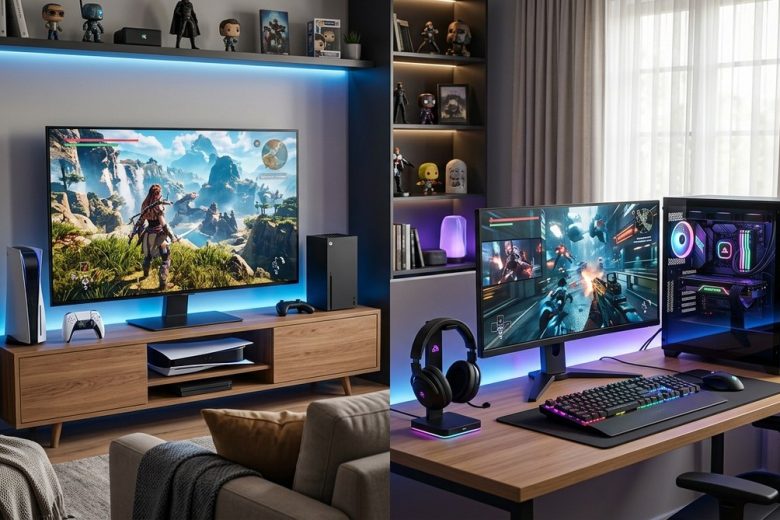
If you are reading this, chances are you have a big question on your hands: should you go with a console or opt for a PC for gaming? The answer is never one size fits all. Both platforms bring something special to the table, and the best choice often comes down to your priorities, budget, and where you like to game. At GeeksUnleashed.me we celebrate the passion for gaming in all its forms. Today we break down console versus PC gaming in a friendly, practical way so you can pick the path that fits you best.
The basics: what each platform promises
Before diving into the nitty gritty, it helps to frame what you are actually comparing.
- Console gaming promises a streamlined, ready to play experience. You buy the box, plug it in, and you are in the game with minimal setup.
- PC gaming promises raw power, customization, and flexibility. It rewards tinkering, modding, and upgrades over time.
Here is a quick snapshot of the core strengths you will often hear associated with each side.
Console gaming advantages
- Plug and play convenience: set it up in minutes and start playing.
- Predictable performance: developers optimize for a fixed hardware target.
- Couch co op and living room vibes: easy to share a controller and play on the TV.
- First party exclusives: some games stay limited to a single platform for years.
- Fewer upgrade cycles: a new console generation is a one time investment every several years.
PC gaming advantages
- Unmatched customization: hardware, controls, and software can be tuned to your liking.
- Higher potential frame rates and resolutions: with the right parts you can push beyond console limits.
- Rich modding and user generated content: communities add new life to games.
- Keyboard and mouse precision: especially valuable for strategy and shooter genres.
- Longevity and resale value: parts can be upgraded gradually instead of replacing the whole system.
Keep these core ideas in mind as we explore more detailed considerations.
Cost and value: price of entry and ongoing costs
Budget matters a lot when choosing between consoles and PCs. Each path has its own budget dynamics.
- Initial investment
- Console: one box, a few accessories, and a game library to start with. There are often bundles that save money upfront.
- PC: you can get started with a modest build but there is a wide range of price points for GPUs, CPUs, RAM, and storage.
- Ongoing costs
- Console: subscription services (for online play, free monthly games, and discounts) plus occasional controller or accessory upgrades.
- PC: ongoing costs include better hardware every few years, potential software subscriptions, and cooling or power supply upgrades when you push performance.
- Game pricing
- Console stores and storefronts frequently offer sales, but PC platforms may swing more with frequent deep discounts on indie and major titles.
- Energy use
- Modern consoles are fairly efficient for living room setups. A good gaming PC can consume more power during heavy sessions, which adds to long term operating costs.
If you want a quick guide:
1) If your priority is a low upfront cost and an easy ride, a console is often the simpler path.
2) If your priority is high end graphics, flexibility, and long term upgrades, a PC is typically the smarter investment over time.
The experience: performance, latency, and immersion
Performance matters, but the way you perceive that performance changes with the platform.
- Frame rate and resolution
- Consoles target consistent performance within their generation. You can expect good 4K or high frame rates on supported titles.
- PCs can push higher frame rates and resolutions, provided you invest in capable hardware. If you chase at ultra 4K with ray tracing, a robust PC helps you push those numbers.
- Latency and input devices
- Console gaming has optimized controllers and widely supported input options, including media remotes and specialized controllers.
- PC gaming shines with keyboard and mouse for precise aiming and control in many genres, plus a growing variety of gamepads and flight sticks.
- Immersion and display
- A living room setup with a large screen and a comfortable chair can make console play feel incredibly immersive.
- A high refresh rate monitor or a high end TV connected to a PC can deliver incredibly smooth visuals, especially for competitive titles.
Bottom line
– If you value a smooth, social living room experience with minimal friction, consoles deliver.
– If you demand the highest possible performance at your preferred settings and you like tweaking, a PC is typically the better canvas.
Libraries, exclusives, and the game catalog
The heart of any gaming decision often comes down to what games you want to play and which titles matter to you.
- Console exclusives matter
- Some franchises are tightly bound to a single platform for a long time. If you crave those experiences, a console unlocks them.
- PC breadth and accessibility
- The PC library is vast. You get a mix of indie gems, ports from console and PC exclusive franchises, and frequent discounts that make many titles affordable.
- Cross platform and timed exclusivity
- The industry increasingly leans toward cross platform releases and longer term console parity. Still, a few big games stay exclusive or temporarily timed exclusive on one platform.
What this means for you
– If you want a steady diet of blockbuster exclusives in your living room, a console can be a natural fit.
– If you want a huge, diverse library and the option to play with flexible settings, PC gaming shines.
Upgrades and longevity: how long should you stay with a platform
The cadence of improvements matters for your planning.
- Console cadence
- Console generations typically span several years. A mid generation refresh can extend the life of a platform, but major upgrades usually come with a new generation.
- PC upgrade cadence
- PCs are designed for incremental upgrades. You can replace individual components like the GPU or RAM without discarding the rest of your system.
- Longevity considerations
- A good console can feel current for most of its lifecycle if you value stable performance and strong first party support.
- A PC built with careful balance between CPU, GPU, and memory can stay relevant longer, given ongoing driver support and new game optimizations.
Tip for shoppers
– If you want to minimize future upgrades, a console is a strong choice.
– If you enjoy staying on the cutting edge with periodic investments, a PC is your playground.
Online services, protection, and account care
Online features are now a core part of modern gaming. They can add value but also complexity.
- Online services
- Consoles offer bundled online services that include multiplayer access, monthly free games, and digital storefront perks.
- PCs rely on platforms like Steam, Epic, and other stores that frequently run sales and community features.
- Security and identity protection
- Both platforms benefit from strong account protection. Enable two factor authentication, use unique passwords, and beware of phishing attempts.
- Crossplay and social features
- Crossplay can broaden your multiplayer options but may require privacy considerations and account linking across platforms.
Practical tip
– Keep your account recovery information up to date and review privacy and security settings regularly. A safer account makes a smoother gaming experience across both consoles and PCs.
Which playstyle are you chasing
To help you map a path, consider these common gamer personas.
- The couch executive
- You prize social play on a big screen, short load times, and easy access. A modern console with a strong game library might be ideal.
- The power user
- You crave 4K textures, ultra settings, and high frame rates. A purpose built PC with a strong GPU and fast SSD is your friend.
- The mod enthusiast
- You want endless customization, community mods, and experimental titles. PC gaming is the playground here.
- The portable or shared device seeker
- You value flexibility and the ability to move between living room and bedroom. A hybrid approach or a portable PC could suit you, alongside a capable console.
Whatever your vibe, the platform that fits your daily rhythm will feel less like a chore and more like a joy.
A simple decision framework to pick your path
If you are still unsure, use this practical framework to decide.
1) List your must have games
– If a lot of your must plays are first party exclusive to a console, factor that in.
2) Set a realistic budget
– Consider both upfront costs and yearly costs for games, online services, and potential upgrades.
3) Decide your preferred gaming environment
– Living room couch sessions vs desk based sessions influence hardware choices.
4) Think about your desire to mod and customize
– If mods matter to you, PC is usually the best platform.
5) Consider future upgrade plans
– Do you want a system you can upgrade gradually or do you prefer a fixed box that stays relevant for years?
6) Evaluate your tolerance for maintenance
– PC builds may require driver updates and occasional troubleshooting; consoles usually require less hands on maintenance.
If after this framework you still feel torn, you are not alone. Many gamers end up with both systems at different times in their lives as needs and budgets evolve.
FAQs you might be asking
- Is console gaming cheaper in the long run?
- It can be, especially if you value a stable price for games and minimal upgrade costs. The total cost of ownership depends on your library and services.
- Can PC outperform consoles in all games?
- Not always. Some games are tuned for console hardware and can look and feel great, but PC can deliver higher frame rates and resolutions when you invest in the right parts.
- Should I wait for the next generation before buying?
- Waiting can pay off if you want to time a major investment. If you are itching to play now, current consoles and mid range PCs can offer excellent value.
- How important is VR in this decision?
- VR is more accessory dependent on your hardware. PC VR currently has stronger flexibility and catalog options, but console headsets are easier for the living room experience.
Real world considerations: what gamers actually prefer
People often weigh intangible aspects just as heavily as raw specs.
- Social and family life
- Consoles often excel in shared spaces. If gaming is a family activity, a console can be a natural center for entertainment.
- Content discovery and sales
- PC platforms frequently host deep discounts and a broader catalog, which makes exploring new titles more affordable.
- Mod culture and creative expression
- If you love experimenting with ideas, PC modding can extend the life of your library and inspire new play styles.
- Reliability and support
- Consoles tend to deliver a more uniform experience with fewer driver headaches, while PCs reward you with customization that requires some hands on management.
The practical, final recommendation
If you want a simple answer that still respects your unique needs:
- Choose a console if you crave:
- Quick setup and reliable performance
- A social, living room friendly experience
- Access to strong, exclusive games
-
A lower maintenance routine
-
Choose a PC if you crave:
- Maximum performance and visual fidelity
- The freedom to customize, upgrade, and mod
- A vast library with frequent discounts
- The ability to use keyboard and mouse for precision gameplay
Many gamers also adopt a hybrid approach:
– A console for living room fun and family play
– A PC for serious gaming sessions, streaming, and content creation
GeeksUnleashed.me understands this flexible reality. Our recommendations emphasize the joy of gaming and the ways different platforms can enhance your hobby rather than complicate it. Whether you chase the comfort of couch co op or the thrill of upgrade cycles, the best choice is the one that makes you play more and stress less.
Final thoughts
The console versus PC debate is not about declaring a winner or assigning a single path to every gamer. It is about identifying what you value most in your play sessions and designing a setup that supports those values. The right choice respects your budget, your space, your preferred genres, and your long term gaming goals.
As you reflect on your options, keep these touchstones in mind:
– What titles do you adore and where are they playable first and best?
– How important is upgrade flexibility versus friction and maintenance?
– Do you prefer a social, shared space or a personal, high performance rig?
– How much do you care about mods, customization, and long term savings on games?
Answering these questions honestly will steer you toward a platform that feels less like a compromise and more like a portal to better gaming.
If you are curious for more guidance, GeeksUnleashed.me offers fresh takes on console choices, game reviews, and geek culture that can help shape your next move. We celebrate all players, from the casual weekend warrior to the hardcore gearhead, and we are here to help you navigate the ever evolving world of games with honesty and enthusiasm.
Whether you end up with a sleek console, a mighty PC, or both, your journey into gaming storytelling, exploration, and competition can be as thrilling as the games themselves. Welcome to a universe where pixels and passion meet, and every choice opens a new adventure.