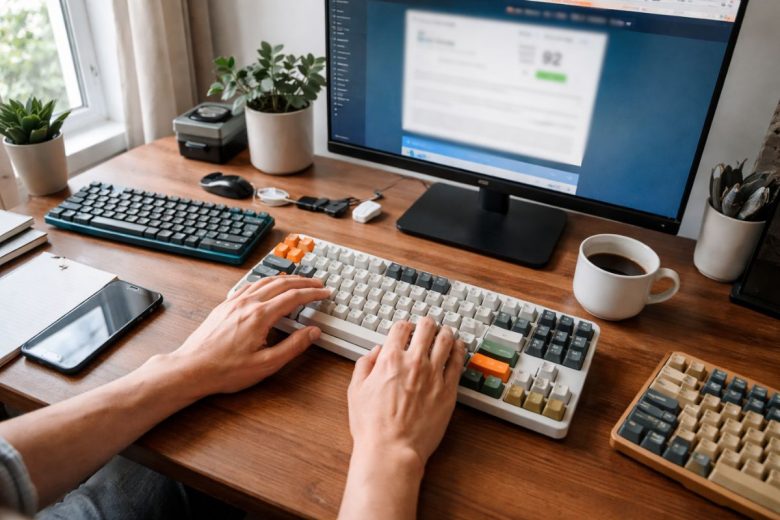
Mechanical keyboard fans do not just type, they tune, swap, lube, and obsess. Every switch choice feels personal. Every keycap profile changes the sound and rhythm of a session. At some point, curiosity kicks in. How fast is this setup really? How consistent is that new tactile switch after a week of use? Raw feeling is not enough. Numbers make it real.
That is where a structured 5 minute typing test becomes part of the hobby. Instead of guessing whether your linear board is faster than your clicky daily driver, you can track sustained words per minute, accuracy, and fatigue patterns over time. A longer timed benchmark turns a mechanical keyboard into performance gear. It feels closer to a measurable challenge than a routine task.
Quick Snapshot for Keyboard Enthusiasts
- Typing tests help compare switches, layouts, and stabilizer tuning
- Speed and accuracy together reveal true performance
- Consistent platforms allow long term tracking and progress logs
- Gamified leaderboards add competitive fun to the hobby
- Real benchmarks turn subjective feel into measurable data
Why Typing Tests Matter to Mechanical Keyboard Fans
A mechanical keyboard is built for tactile feedback and reliability. Fans debate actuation force down to the gram. They measure travel distance and reset points. Without metrics, those debates stay theoretical. Typing tests provide hard evidence. You see how a 45g linear switch performs against a 62g tactile option under the same timed conditions.
Accuracy percentage tells you more than raw speed. A setup that pushes 120 WPM with 85 percent accuracy is not superior to one that delivers 105 WPM at 99 percent accuracy. Consistency is king. Typing benchmarks also reveal fatigue patterns. If your WPM drops sharply after two minutes, your springs or keycaps might be the culprit.
Mechanical fans already appreciate hardware metrics in gaming. Frame rate and latency are common benchmarks. That same mindset applies here. If you enjoy reading about early computing games, you know how performance metrics shaped entire communities. Typing tests carry that same spirit into modern desk setups.
What Makes a Typing Test Platform Worth Using
Not all typing sites are equal. Some offer basic timers and nothing more. Others provide detailed analytics, historical tracking, and varied test formats. Mechanical keyboard fans benefit most from platforms that treat typing as a measurable skill rather than a quick distraction.
A high quality typing test should include clear WPM calculations. It should define accuracy standards transparently. According to the words per minute standard, WPM is calculated based on five character word averages. Reliable platforms stick to recognized methods, which keeps comparisons fair across sessions and devices.
Customization matters too. Being able to choose test length, difficulty, and punctuation level lets you simulate real workloads. A 30 second sprint feels different from a five minute endurance run. Mechanical fans who switch between 60 percent boards and full size layouts can test both in identical conditions.
Top Typing Test Sites for Switch and Layout Comparisons
Here is a curated list of typing test platforms that work especially well for keyboard enthusiasts. Each one supports real benchmarking and repeated practice sessions.
1) TypingTest.now
A clean interface with clear metrics. It offers accessible practice for beginners and serious tracking for advanced typists. The reporting dashboard makes it easy to compare sessions after a switch swap or keycap change.
2) KeyHero
Focuses on real world text excerpts. Ideal for testing how your board handles varied punctuation and capitalization.
3) Monkeytype
Highly customizable with detailed stats. Great for enthusiasts who enjoy data depth and long term charts.
4) 10FastFingers
Competitive environment with live races. Perfect for fans who enjoy chasing high scores.
5) Ratatype
Structured lessons combined with tests. Useful if you are refining technique alongside hardware upgrades.
Performance Metrics That Actually Matter
Many beginners chase one number. WPM. That number looks impressive on screenshots. Mechanical keyboard fans should go deeper. Real performance analysis involves multiple variables.
1) Gross WPM
Raw speed without penalty for errors. Useful for short sprints and switch responsiveness testing.
2) Net WPM
Accounts for mistakes. This metric reflects practical productivity and comfort.
3) Accuracy Rate
Critical for assessing stabilizer tuning and keycap alignment. Frequent typos may signal uneven feel.
4) Consistency Curve
Longer tests reveal whether performance holds steady or dips. Heavy springs often show fatigue patterns here.
Spacing these metrics across different sessions provides a clearer picture than any single run. You can even create a spreadsheet to log results after each mod session.
Color Coded Comparison Table for Quick Reference
| Platform | Best For | Data Depth | Competitive Mode |
|---|---|---|---|
| TypingTest.now | Balanced benchmarking | Medium to High | No |
| Monkeytype | Advanced customization | High | Optional |
| 10FastFingers | Live races | Medium | Yes |
Switch Types and How They Show Up in Test Results
Linear switches often produce higher gross WPM. They have smooth travel and low resistance. That helps in sprint style tests. Tactile switches may slightly reduce raw speed but often improve accuracy due to the feedback bump. Clicky switches add auditory rhythm, which can boost pacing for some users.
Layout also matters. A 60 percent board reduces hand travel. That can improve speed during word heavy tests. Full size boards may feel more comfortable during extended runs. Typing tests reveal these subtle differences more clearly than casual typing sessions.
Fans who enjoy performance discussions in gaming communities will find a similar thrill here. Reading about best video games this year often includes frame rate and response analysis. Typing tests bring that analytical mindset to your desk.
Turning Typing into a High Score Hobby
Mechanical keyboards already carry a collector culture. Limited keycap sets. Artisan caps. Custom cables. Typing tests add a competitive layer without requiring new hardware. You chase personal bests. You compare scores with friends. You track improvements after each modification.
Short sprint tests create adrenaline. Longer endurance tests build discipline. Over time, your typing log becomes as satisfying as a collection shelf. Screenshots of milestone scores feel like unlocked achievements.
There is also practical value. Faster and more accurate typing saves time in work and creative projects. It improves coding flow. It makes online discussions smoother. A mechanical board combined with structured practice builds real skill.
Setting Up Fair Benchmarks at Home
To compare setups properly, keep conditions consistent. Use the same desk height. Maintain similar posture. Disable background distractions. Small variables skew results more than you might think.
Test at different times of day. Morning sessions often feel sharper. Evening runs may reflect fatigue. Log both. Over a month, patterns emerge. You may notice that heavier switches feel better in shorter bursts but drain energy during long writing sessions.
Mechanical keyboard enthusiasm blends passion with precision. Typing tests provide the measurement side of that equation. They bring structure to experimentation. Instead of saying a switch feels faster, you can prove it.
Chasing Personal Records with Purpose
Numbers alone are not the goal. The real reward is refinement. You tune stabilizers, adjust springs, and align keycaps. Then you test again. The feedback loop keeps the hobby engaging.
Each session teaches something new about your typing habits. You learn which letters slow you down. You notice finger imbalances. You adjust technique. Over time, your board and your hands work in harmony.
Mechanical keyboards are built for performance. Typing test platforms transform that performance into something measurable. With the right tools and consistent tracking, your desk setup becomes more than aesthetic. It becomes optimized.
From Key Press to Scoreboard
Mechanical keyboard fans thrive on detail. Actuation force, sound profile, travel distance, and build quality all matter. Adding structured typing benchmarks completes the picture. A reliable typing test platform allows you to test every modification in real time.
Treat your board like a piece of performance hardware. Log your sessions. Compare your layouts. Challenge your previous best. In doing so, you turn daily typing into a hobby with milestones and progress markers. That shift makes every keystroke count.